Sir Isaac Netwotn’s three laws of motion. Three states of matter (solid, liquid, gas). We live on the third rock from the sun. Our metric system of measurement uses metre, litre, and gram. Morse code is a reliable system as the signal is made up of only three parts – a long ‘on’, the dash; a short ‘on’, the dot; and an ‘off’ signal. Do you know what SOS means in Morse code?
When I see a bird that walks like a duck and swims like a duck and quacks like a duck I called that bird a duck
J. W. Riley
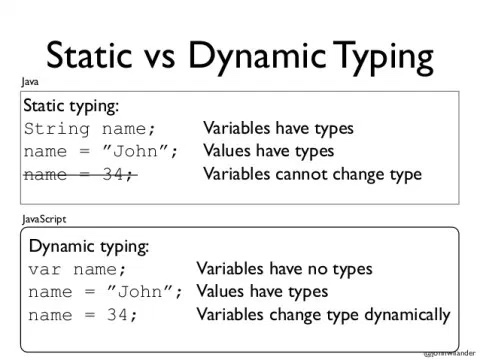
The Python code language is dynamically typed. In many languages (C++, Java) you do need to explicitly declare the types of variables. Python uses duck typing for all operations (function calls, method calls, and operators). You can treat an object as a duck. It raises a TypeError at runtime if an operation cannot be applied to an object because it is of an inappropriate type.
The Earth orbits the Sun once a year in a nearly circular orbit.
The Earth’s axis of rotation (the straight line through the center of the Earth between the north and south poles) is not perpendicular to the plane of the Earth’s orbit. The Earth’s axis is tilted by about 23.4° from the the direction perpendiular to the orbital plane.
The orientation of the Earth’s axis in space remains nearly constant even as the Earth revolves around the Sun. It always points in the general direction of the star Polaris.
sun track
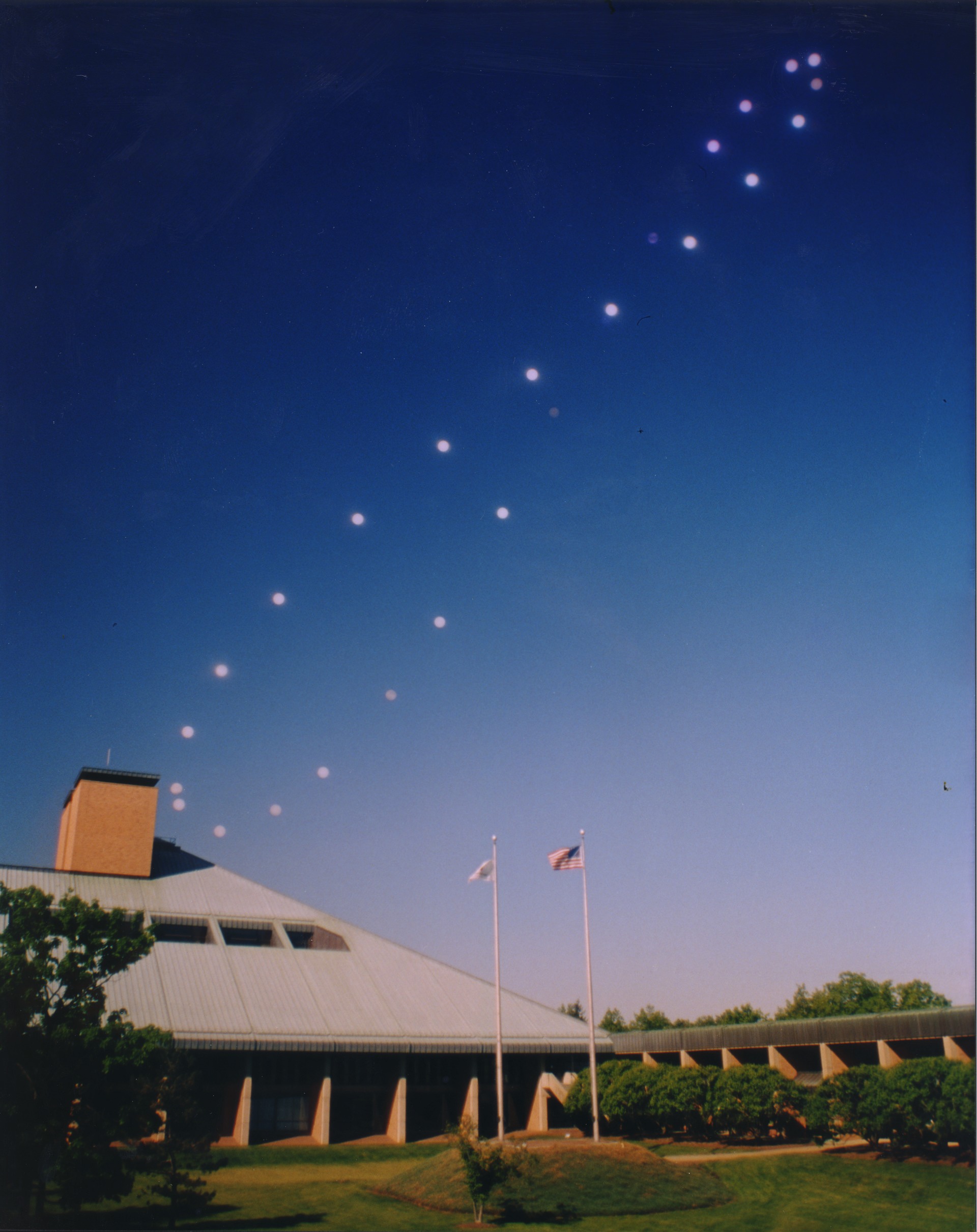
The result is that when the Earth is on one side of its orbit, the south pole is tilted toward the Sun (by as much as 23.4°) and the southern hemisphere experiences summer. Six months later, when the Earth is on the opposite side of its orbit, the north pole is tilted toward the Sun (by as much as 23.4°) and the northern hemisphere experiences summer. (Views of the Sun’s illumination on the Earth on any date are available here.) What we see from our viewpoint in the Earth’s northern hemisphere is that the Sun’s apparent daily track across the sky is much higher (that is, more northerly) in summer, and lower (more southerly) in winter. From horizon to horizon, the Sun’s track is longer in summer and shorter in winter; so that in summer, sunrises are much earlier and sunsets are much later than in winter. See, for example, the graphic above, or this photograph of the Sun’s paths through the sky at different times of the year.
The great circle
So we are used to the fact that the length of daylight is significantly longer in summer than winter, and most of us know that the “longest day” (that is, the day when the Sun is above the horizon the longest) is the summer solstice, around June 21, when the Sun has reached its most northerly and longest track in our sky; and the “shortest day” is the winter solstice, around December 21, when the Sun has reached its most southerly and shortest track in our sky.
It would make sense, then, for the summer solstice to also be the date at which sunrise is earliest and sunset is latest; and for the winter solstice to be the date when sunrise is latest and sunset is earliest. However, that is not what happens! Nature sometimes defies our expectations.
The local meridian is a great circle passing through the celestial poles and through the zenith of an observer’s location on the planet. Image Credit: Daniel V. Schroeder
And that is because we have not talked about one other factor in sunrise and sunset times that is not at all obvious. It is that the Sun moves across the sky, in its apparent daily track, at slightly different rates at different parts of the year. Most of the Sun’s east-to-west apparent motion in the sky is caused, of course, by the rotation of the Earth, which is quite uniform (to milliseconds per day). But a small part of the Sun’s apparent daily motion depends on the position of the Earth in its orbit around the Sun. This component of the Sun’s apparent motion varies by a small amount over the course of a year due to the elliptical shape of the Earth’s orbit and to the tilt of the Earth’s axis.
A hypothesis states your predictions about what your research will find. It is a tentative answer to your research question that has not yet been tested. For some research projects, you might have to write several hypotheses that address different aspects of your research question.
A hypothesis is not just a guess — it should be based on existing theories and knowledge. It also has to be testable, which means you can support or refute it through scientific research methods (such as experiments, observations and statisticalanalysis of data).
Variables in hypotheses
Hypotheses propose a relationship between two or more variables. An independent variable is something the researcher changes or controls. A dependent variable is something the researcher observes and measures.
Daily apple consumption leads to fewer doctor’s visits.
In this example, the independent variable is apple consumption — the assumed cause. The dependent variable is the frequency of doctor’s visits — the assumed effect.
Three steps to hypothesis testing
State the null hypothesis and alternative hypothesis
Decide on test static and critical value
Compute p-value. If P-value is less than the critical value reject the null hypothesis and accept the alternative hypothesis
Simple hypothesis
Simple hypotheses are ones which give probabilities to potential observations. The contrast here is with complex hypotheses, also known as models, which are sets of simple hypotheses such that knowing that some member of the set is true (but not which) is insufficient to specify probabilities of data points.
Simple hypothesis – Bell Curve
Complex hypothesis
Complex hypothesis is that one in which there are multiple dependent as well as independent variables. Example: Global warming causes icebergs to melt which in turn causes major changes in weather patterns.
Complex hypothesis
Null hypothesis
A null hypothesis is a hypothesis that says there is no statistical significance between the two variables in the hypothesis. … For example, a null hypothesis would be something like this: There is no statistically significant relationship between the type of water I feed the flowers and growth of the flowers.
Null hypothesis
Create a Null Hypothesis
Depending on your study, you may need to perform some statistical analysis on the data you collect. When forming your hypothesis statement using the scientific method, it’s important to know the difference between a null hypothesis vs. the alternative hypothesis, and how to create a null hypothesis.
A null hypothesis, often denoted as H0, posits that there is no apparent difference or that there is no evidence to support a difference. Using the motivation example above, the null hypothesis would be that sleep hours have no effect on motivation.
An alternative hypothesis, often denoted as H1, states that there is a statistically significant difference, or there is evidence to support such a difference. Going back to the same carrot example, the alternative hypothesis is that a person getting six hours of sleep has less motivation than someone getting eight hours of sleep.