Posted on

Don’t Buy a Cello Until You Read This

cello purchase

Buying a cello is a big deal. We’re not talking about a casual purchase here; it’s a real investment, and it’s easy to get it wrong if you don’t know what to look for. First-time buyers often rush in, pick based on looks or price alone, and end up with an instrument that doesn’t actually work for them. 

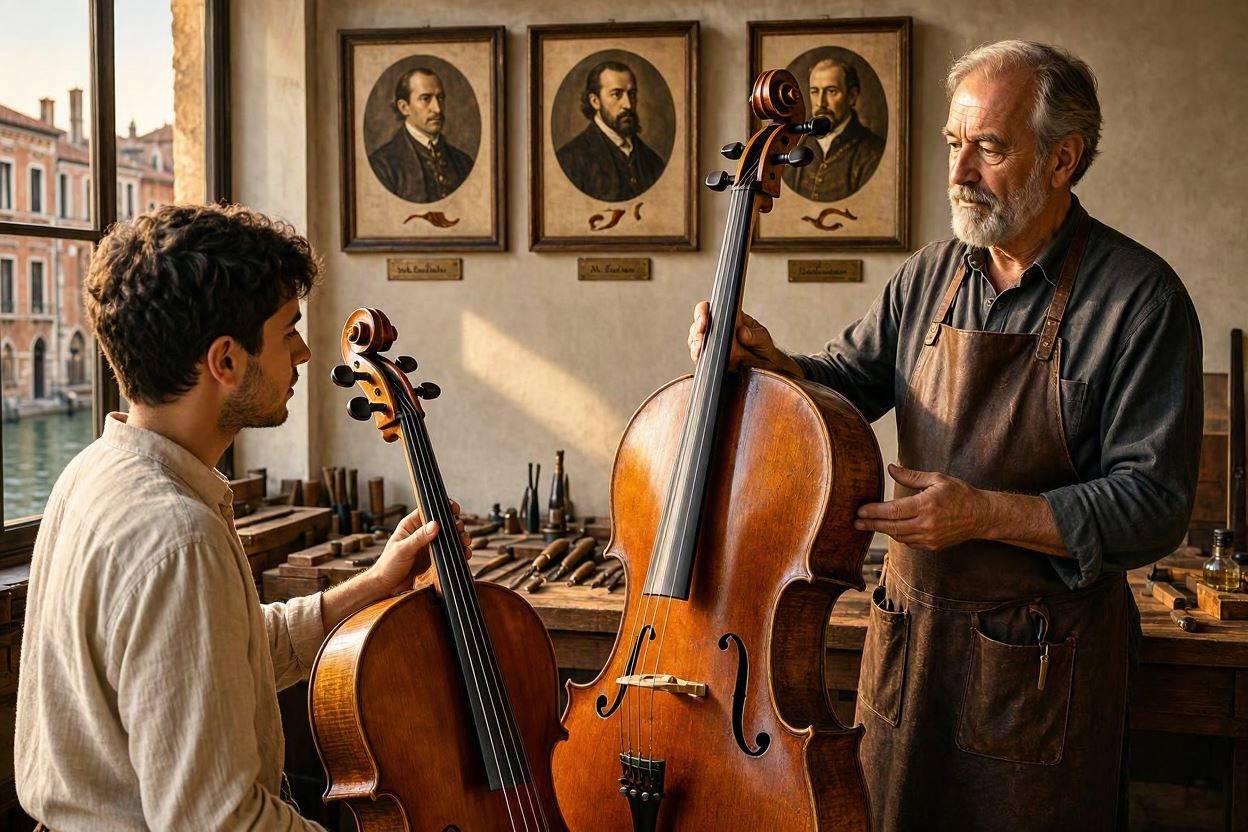
Venice history highlights three legendary instrument makers—Santo Serafino, M. Grail, and Domenico Montanana—who worked closely during the golden age of Venetian craftsmanship.

Before you hand over any money, there are a few things worth knowing.

1. Determine the Right Cello Size

A cello that’s too big is hard to reach around and control. One that’s too small won’t grow with you or feels awkward once your technique develops. Comfort matters here more than people realize. If the fit is off, playing becomes a physical struggle instead of something you enjoy.

2. Know What Makes a Quality Cello

The thing with cellos is that they’re not built the same. For instance, the wood used for higher-end cellos is different from the woods used in budget-friendly models. Because of that, the sound will also be different. 

A well-made cello has a fuller, warmer tone, is well set up, and has well-adjusted parts ready for playing.

3. Set a Realistic Budget

Cellos come in different prices, from beginner-friendly, affordable ones to jaw-dropping ones. Before you buy, figure out what you actually need right now, not what you might need five years from now. Also pay attention to what’s included in the price. 

You might also need to consider accessories that can add up to the cost. Some cellos come with a basic bow, case, and strings, while some will require you to separately purchase the accessories (costing you more)

4. Test Before You Buy

Never buy a cello without playing it first, or having someone play it for you if you’re new to the instrument. Listen to how it sounds. Does the tone feel warm and clear, or dull and thin? 

The best way to check a cello is to see how it responds when you bow harder or softer. You need to focus on the cello’s condition, too. No warping, cracks, or anything. 

5. Buy from a Trusted Music Shop

Most buyers overlook this one. They just tend to buy from a random online listing that looks cheap, but no added value (like expert advice or proper setup). 

Remember that a trusted shop can give you helpful advice and services regarding your cello. For instance, they can help you determine the right size, model, and setup so you can play it right away. 

When searching cellos for sale near me, it’s important to stick with sellers who are a hundred per cent sure of the instruments they’re selling.

Conclusion

Remember that purchasing the right cello (and whatever instrument it is) should start from knowing the standards. What to look for, the size, and the build. You need to take your time to compare instruments and test them out so you can avoid costly mistakes in the future. A trusted cello seller is all you need for a hassle-free buying experience.
Posted on

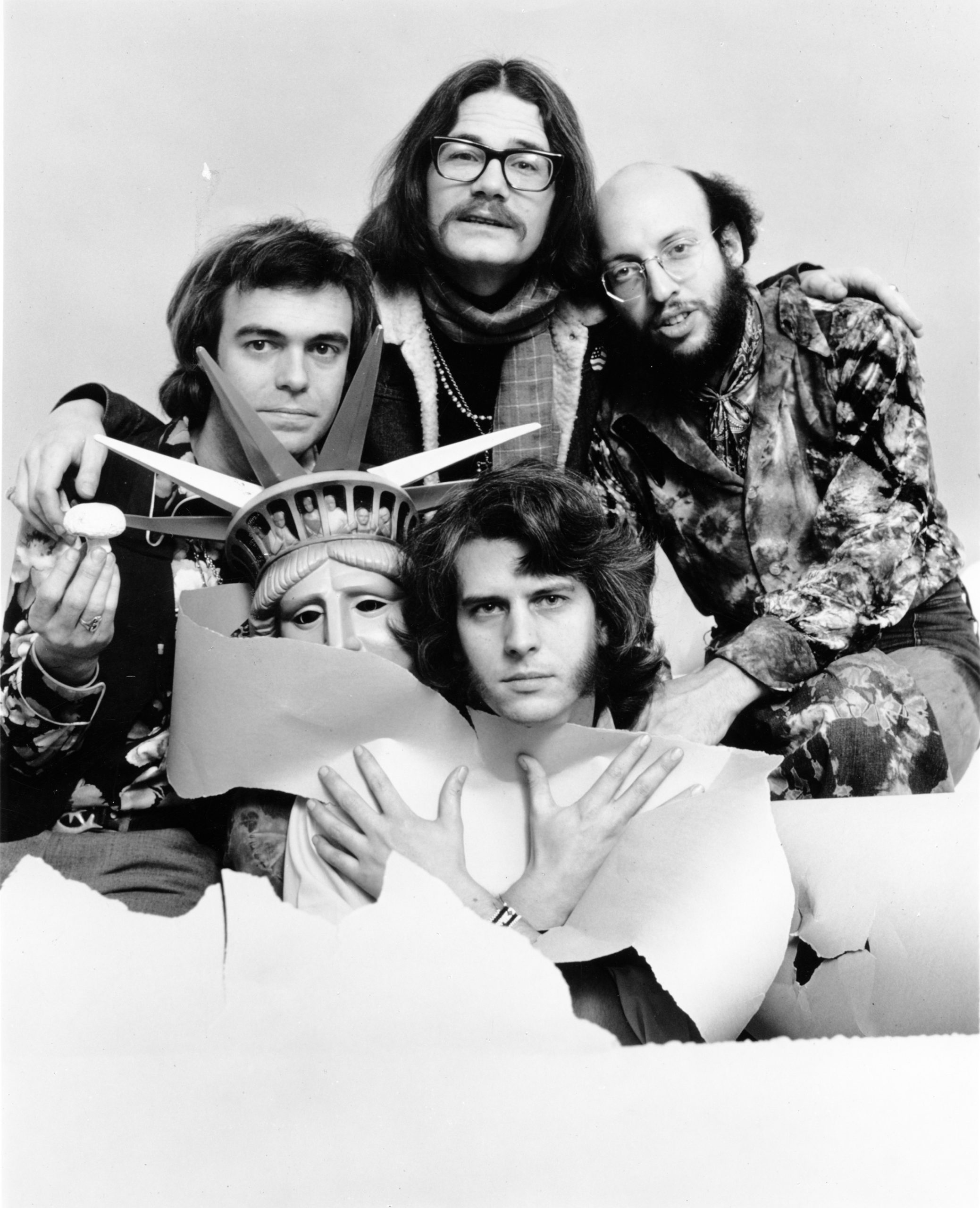
Nick Danger Third Eye ~ Firesign Theatre

Firesign Theater

Nick Danger is a fictional character created by the comedy group The Firesign Theatre, portrayed by Phil Austin. Danger is a parody of the hard-boiled detective, and is often announced as “Nick Danger, Third Eye”, a parody of the term private eye. Danger stories involve stereotypical film noir situations, including mistaken identity, betrayal, and femmes fatales. Danger originally appears on the 1969 album How Can You Be in Two Places at Once When You’re Not Anywhere at All.

Press Quotes

“The Beatles of comedy.” ⁠—⁠Library of Congress

“The Firesign Theatre is a comedy group that uses the recording studio at least as brilliantly as any rock group …” ⁠—⁠Robert Christgau

“… [Firesign is] the funniest team in America today, combining elements of W C Fields, James Joyce, Lord Buckley, contemporary television and Thirties radio, scrambling it all up in a collective consciousness that defies description, and then spewing it out in a free-form half-hour epic presentation of sheer insanity … Their timing is dynamite, their dialog kaleidoscopic, and their satire is, so to speak, acidic. WAITING FOR THE ELECTRICIAN … a masterpiece of paranoia.” ⁠—⁠Ed Ward, Rolling Stone

Video/Recording

Posted on

Close Encounters of the Third Kind — Tones

Start with the tone. (Pinkish-red) – D

Up a full tone. (Orange) – E

Down a major third. (Purple) – C 

Down an octave. (Yellow) – C (an octave lower)

Up a perfect fifth. (White) – G

These are the tones and their corresponding colors that were bequeathed upon humanity by the extra-terrestrials in Close Encounters of the Third Kind and then relayed back to those aliens via a synthesizer and colored light patterns (and also a xylophone by a little kid). 

These tones establish contact with the aliens in the closing scenes, and also create the basis for the score of the entire film. They are, as best as can be surmised, the basis of a tonal language/alphabet that the aliens use to interact with the humans. In short, they are very important to the movie.

They also are, in my experience and of many others, what the viewer takes with them the most after seeing the film. Those tones replayed in my head, like a man trying to communicate with the mothership. I recalled the people in India, sitting at the spot of a UFO sighting, and as one, chanting the five tones over and over again, faces turned towards the ever-present heavens, alight with joy and expectation. The sounds made their way into pop culture, signifying that there may be aliens among us even to those who have not seen the movie. 

There is a foreignness to them, especially in that fourth note, that dips an octave and feels slightly off key, and in the way they end, with expectation and a lack of finality. But there is clear design, and comprehension- a composition to them as well. There is intelligence behind the design. They were not randomly thrown together, a feeling or a thought is being communicated through the tones, as music is wont to do. 

But the strangeness of the tones, and Close Encounters in general, is the lack of any clarity to the meaning of that collection of sounds. The scientists conclude, during the exchange with the mothership, that they are being taught a quasi-tonal alphabet. As one man put it, “It’s the first day of school fellas.” But even though the tones result in a reaction from the aliens, we don’t know what was communicated.

Video: Close Encounters of the Third Kind — Tones