Posted on Leave a comment

THE MOUSAI

The Mousia
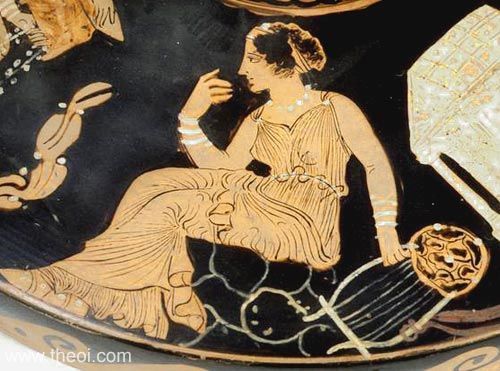
Muse with barbiton, Paestan red-figure lekanis C4th B.C., Musée du Louvre

THE MOUSAI (Muses) were the goddesses of music, song and dance, and the source of inspiration to poets. They were also goddesses of knowledge, who remembered all things that had come to pass. Later the Mousai were assigned specific artistic spheres: Kalliope (Calliope), epic poetry; Kleio (Clio), history; Ourania (Urania), astronomy; Thaleia (Thalia), comedy; Melpomene, tragedy; Polymnia (Polyhymnia), religious hymns; Erato, erotic poetry; Euterpe, lyric poetry; and Terpsikhore (Terpsichore), choral song and dance.
Continue reading THE MOUSAI

Posted on Leave a comment

Money bags

This year (2016) July has 5 Fridays 5 Saturdays and 5 Sundays. This happens once every 823 years. This is called money bags. So copy this to your status and money will arrive within 4 days. Based on Chinese philosophy of Feng Shui. Those who read and do not copy will be without money.I am copying cause I’m not taking any chances.!!

Posted on Leave a comment

Atalanta’s race

Atalanta’s race - Three golden apples
Atalanta’s race – Three golden apples

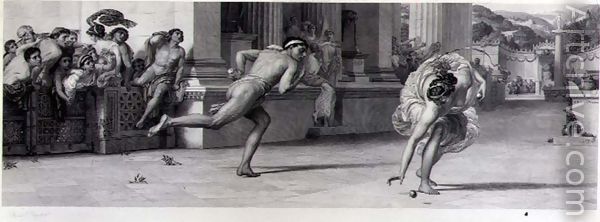
Atalanta’s race: A contest that is won
through trickery. The allusion is to Greek mythology
and the race that was run between the fl eetfooted
huntress Atalanta and her suitor
Hippomenes (sometimes identifi ed as Melanion).
If Hippomenes won the race, according to the
agreement, Atalanta would become his wife, but if
he lost he would be put to death, like all her previous
suitors. Before the race, Aphrodite gave Hippomenes
the three golden apples of the Hesperides,
which Hippomenes dropped along the route so
that Atalanta would pause to pick them up. By this
ruse Hippomenes won the race, and they were
married. “Laurie reached the goal fi rst and was
quite satisfi ed with the success of his treatment,
for his Atalanta came panting up with fl ying hair,
bright eyes, ruddy cheeks, and no signs of dissatisfaction
in her face” (Louisa May Alcott, Little Women, 1868–69).

Source: http://www.greenvalleyhs.org/library/Documents/Allusions.pdf