Posted on 3 Comments

Three types of paradoxes

An Antinomy paradox

The Ways of Paradox and Other Essays

by W.V. Quine

There are essentially three categories of paradoxes

  • Falsidical – Logic based on a falsehood
  • Veridical – Truthful
  • Antinomy – A contradiction, real or apparent, between two principles or conclusions, both of which seem equally justified

Willard Van Orman Quine (AKA W. V. O. Quine, or “Van”to his friends) (1908 – 2000) was an American philosopher and mathematical logician, widely considered one of the most important philosophers of the second half of the 20th Century.
Three types of paradoxes
Posted on

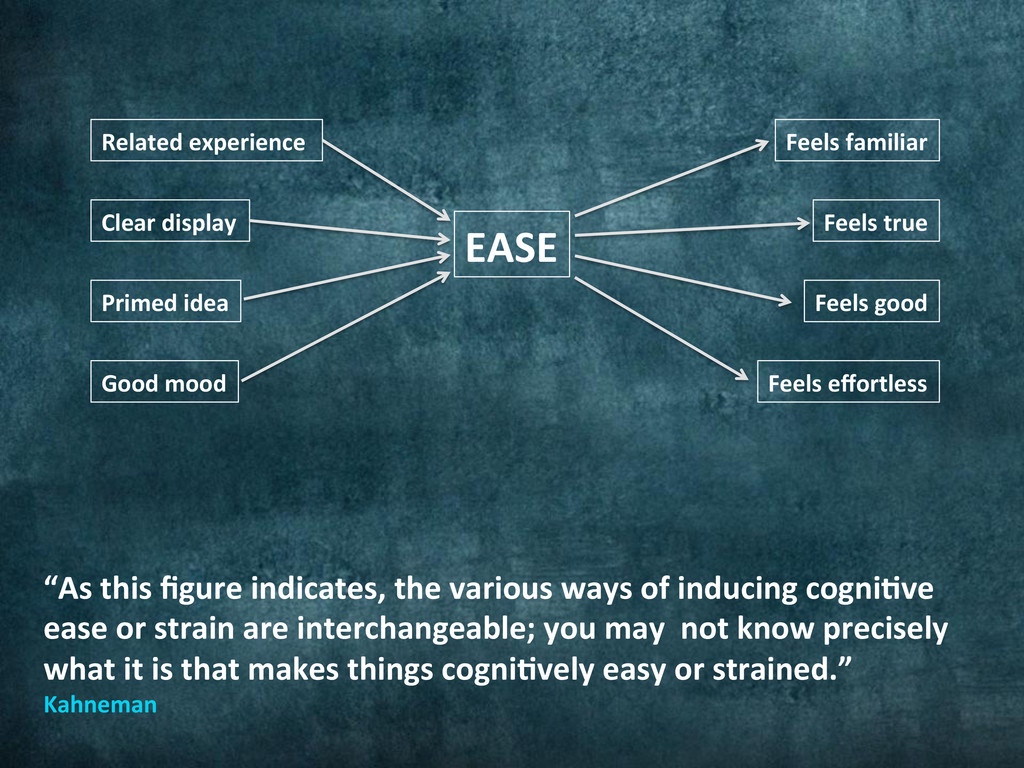
Cognitive Ease

Cognitive Ease chart

Cognitive ease or fluency is the measure of how easy it is for our brains to process information. … The Cognitive ease principle reveals that when people have to switch to the second system of thinking, causing cognitive strain, they become more vigilant and suspicious.

Frequent repetition can be enough to convince people to believe things that are not true because familiarity generates a sense of cognitive ease. Called the mere-exposure effect, advertisers make use of it, but they aren’t the only ones. Information that is easy to understand also gives us a sense of cognitive ease.

Humans tend to avoid stressful and demanding cognitive strain, often making them vulnerable to many biases. This “laziness” and desire for cognitive ease often invites individuals to a world of irrationality where the decisions made can be detrimental.

Cognitive Ease – Veritasium
Posted on Leave a comment

Time is …

Time is ...
Time is …