
The number three has a way of appearing at the most significant human moments: birth, life, and death. Beginning, middle, and end. Past, present, and future. It is no surprise, then, that the three most meaningful applications of AI video technology cluster around the same fundamental human need — the preservation of memory and the transformation of experience into something that can outlast the moment itself.
AI video tools have arrived at a point of genuine capability. What follows is not a technical survey but a practical exploration of three distinct ways these tools are changing how people engage with video — and with the stories they want to keep.
One: Transforming Existing Footage Into Something New
The first and perhaps most immediately useful capability is video-to-video transformation: the ability to take footage that already exists and fundamentally change its visual character without refilming a single frame.
This matters more than it initially sounds. Most people have video content they’ve recorded over the years that is technically usable but aesthetically limited — shot on older devices, in poor lighting, with the flat visual treatment of casual recording rather than intentional filmmaking. The footage documents real moments. The presentation doesn’t do those moments justice.
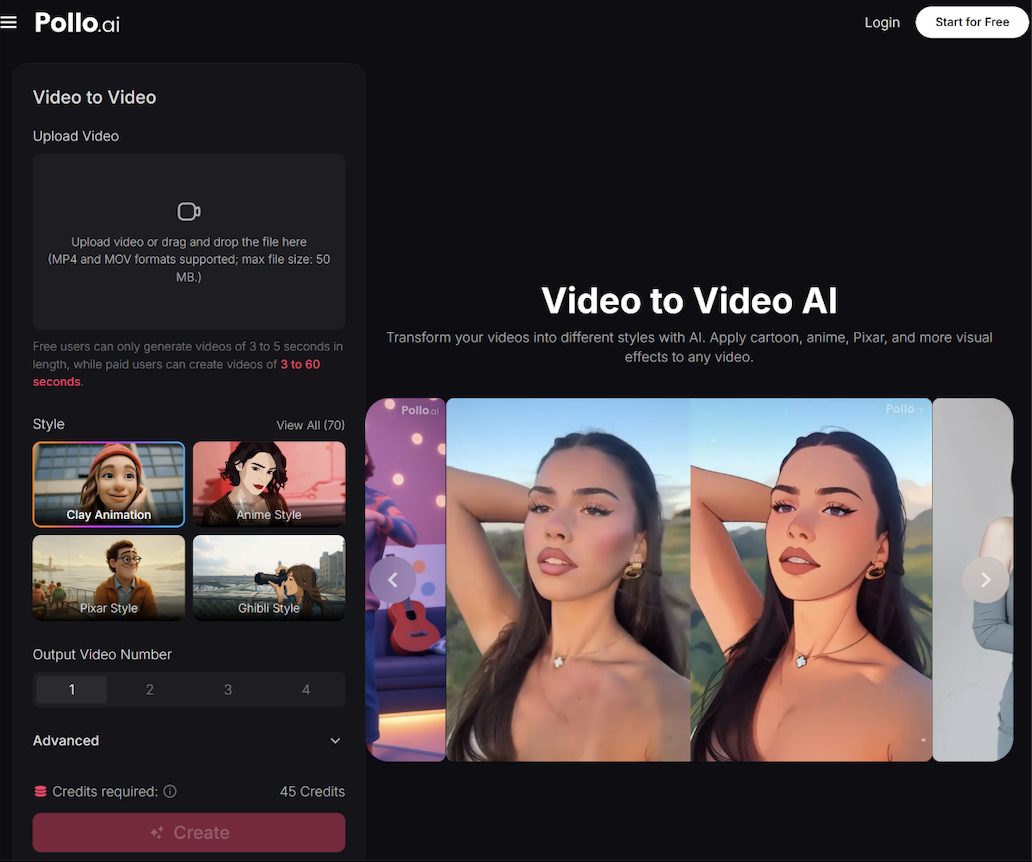
The video to video tool on Pollo AI addresses this directly. Existing video is uploaded and processed through AI that applies new visual treatments — cinematic color grading, improved atmospheric quality, format optimization for modern screens and social platforms — while preserving the underlying content. The people, the places, the moments stay. The visual layer is elevated. Pollo AI has built this for the reality that most meaningful footage was never shot with production quality in mind, and the technology now exists to bridge that gap retrospectively.
For anyone with a collection of old family videos, event recordings, or travel footage that has never been watched because it looked too rough to share, this capability opens a practical path to making that content genuinely viewable again.
Two: Creating Tributes That Do Justice to a Life
The second application addresses one of the most emotionally significant video creation needs that exists: commemorating a person. Memorial videos, tribute compilations, celebration-of-life presentations — these are videos made not for entertainment or marketing but for love, and the standard they need to meet is entirely different.
The challenge with tribute video creation has always been that the moment when such content is most needed is precisely when production capacity is lowest. Families managing loss, friends coordinating memorial events, colleagues organizing retirement celebrations — these are people with limited time, limited technical skills, and an understandable desire to get this right.

The tribute video maker on Pollo AI approaches this use case with the sensitivity it requires. You provide the photos, the dates, the details, the memories — the platform handles the production. The output is a formatted tribute video appropriate for sharing at a service, sending to family members, or preserving as a lasting record of a person’s life. Pollo AI’s tool is designed for the non-professional who needs professional-quality output for something that genuinely matters. The technical process should be invisible; the person being honored should be what comes through.
This is one of those applications where AI’s capacity to handle the mechanical work of production frees the human creator to focus entirely on the meaning of what they’re making.
Three: The Broader Pattern — Memory, Technology, and the Rule of Threes
The third dimension of this shift is more conceptual but no less real: the way AI video tools are changing the relationship between lived experience and recorded experience, between the moment and its preservation.
There has always been a gap between what we experience and what we can capture. Photography narrowed it. Video narrowed it further. AI video tools are now addressing what remained — the gap between having footage and having something worth watching. The transformation capability turns archival material into living content. The tribute capability turns a collection of photographs into a narrative. Together, they represent a new phase in the long human project of keeping the past present.
The rule of three tells us that three is the smallest number needed to create a pattern, and there is a pattern here worth naming: we record, we transform, we remember. The tools have changed. The impulse is as old as storytelling itself.
What makes AI video tools significant is not the technology in isolation but what it enables — more people, with more footage, from more moments in their lives, being able to create video that genuinely represents what those moments meant. That is, in the end, a human story dressed in technical clothing. And the best human stories, as the rule of three has always known, come in threes.


