
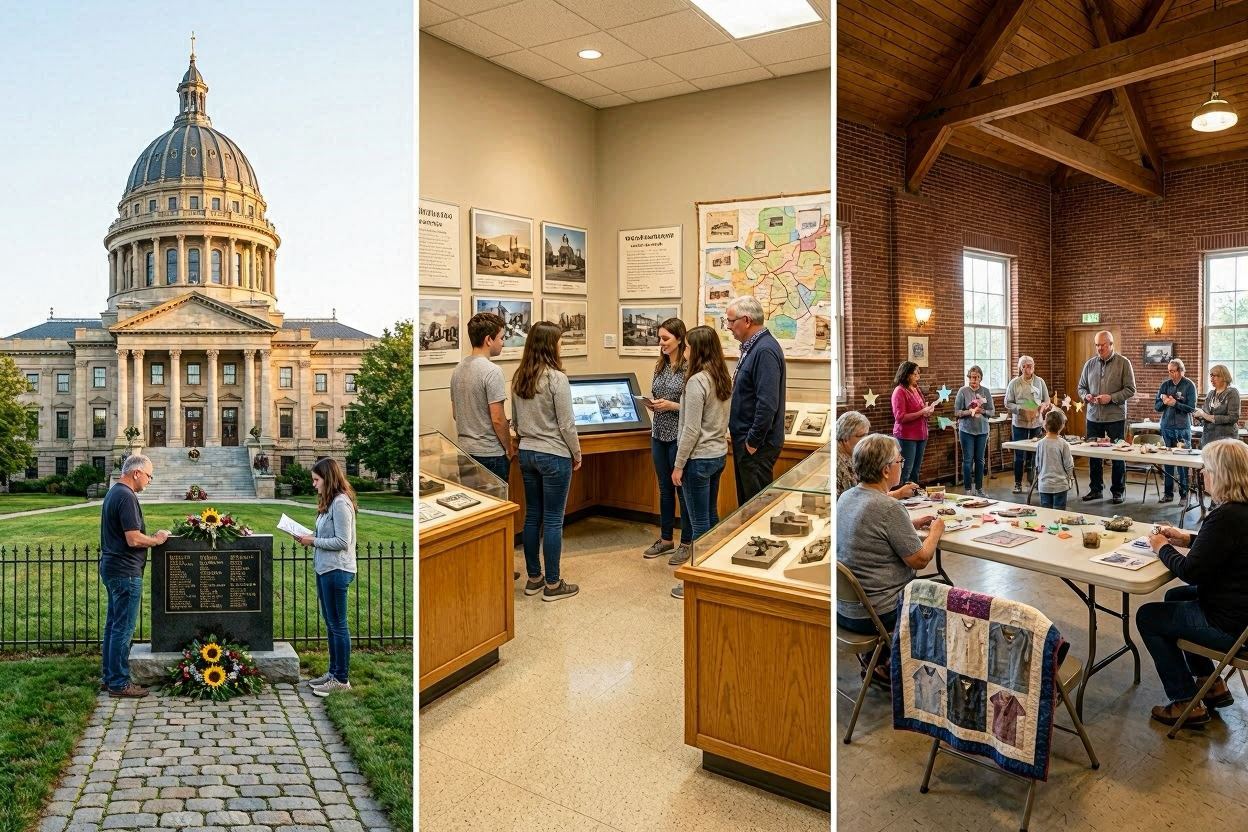
Every city carries history in layers. Some places are known for government, education, industry, faith, or family roots that stretch across generations. Springfield, Illinois, carries several of those identities at once. As the state capital and a regional hub for Central Illinois, Springfield is a place where public memory, civic responsibility, and religious history often overlap. When communities connected to cities like Springfield face difficult chapters, a three-part structure can help people respond with care: memory, accountability, and support.
1. Memory Gives Local History a Shared Starting Point
Difficult histories can become harder to face when they are pushed into silence. In a city such as Springfield, where local identity is tied to public institutions, neighborhoods, churches, schools, and civic life, memory has a community-wide role. It helps people understand that harm is not only an individual experience. It can also affect families, congregations, and the trust people place in local institutions.
This is especially important when the history involves the Diocese of Springfield in Illinois. The geographic connection matters because survivors and families may be looking for information tied to a specific region, not a general national conversation. Someone in Central Illinois may need context that is different from someone in Chicago, Peoria, or Belleville, even when the broader issue is similar. For people trying to understand legal options connected to this local setting, Springfield clergy abuse lawyers can be part of a wider search for guidance, records, and survivor-focused resources.
Memory should be handled with restraint. People do not need graphic details to understand that serious harm occurred or that institutions have responsibilities. Clear language, verified information, and compassion can help a community remember without turning pain into spectacle.
2. Accountability Turns Local Memory Into Responsibility
Remembering is strongest when it leads to responsible action. For communities across Illinois, accountability can involve public acknowledgment, independent review, reporting procedures, policy changes, and support for those who come forward. In Springfield, where state government and regional religious life both shape public trust, accountability also has a civic dimension. People often look to records, reports, and institutional responses to understand what happened and what should change.
In cases involving institutional abuse, accountability depends on documentation. Communities need reliable records rather than rumors. A statewide clergy abuse investigation can help establish a clearer public record, especially when individual accounts are part of a broader regional pattern. Reports, timelines, and official findings give communities a shared basis for discussion.
Accountability should be specific. It asks who had authority, what was reported, what systems failed, and what protections are needed now. These questions matter in every city, but they take on a more grounded meaning when connected to actual places where people live, worship, work, and raise families.
3. Support Helps People Move Forward Where They Are
Support is the part of remembrance that looks toward the living. A community can preserve memory and seek accountability while also asking what survivors and families need today. In Springfield and the surrounding parts of Central Illinois, support may come through counseling, legal guidance, trusted community organizations, careful public education, and stronger safeguards for children and vulnerable people.
Different cities may respond in different ways. A large city may have more specialized agencies nearby, while a smaller regional community may rely more heavily on local networks, family systems, faith communities, and county-level resources. That difference makes geography important. Healing is rarely abstract. People need support that makes sense for where they are.
A three-part approach can make the work feel less overwhelming. Memory asks people to face the truth. Accountability asks people to respond to it. Support asks people to care for those still carrying its effects. This kind of three-part framework can help communities discuss painful subjects with more clarity and less confusion.
Hope does not require forgetting. For a place like Springfield, hope can mean facing local history honestly while making space for safer institutions and better support. Communities cannot change difficult histories, but they can change how those histories are carried. Memory prevents silence. Accountability creates responsibility. Support gives people a way to move forward without leaving the truth behind.


