
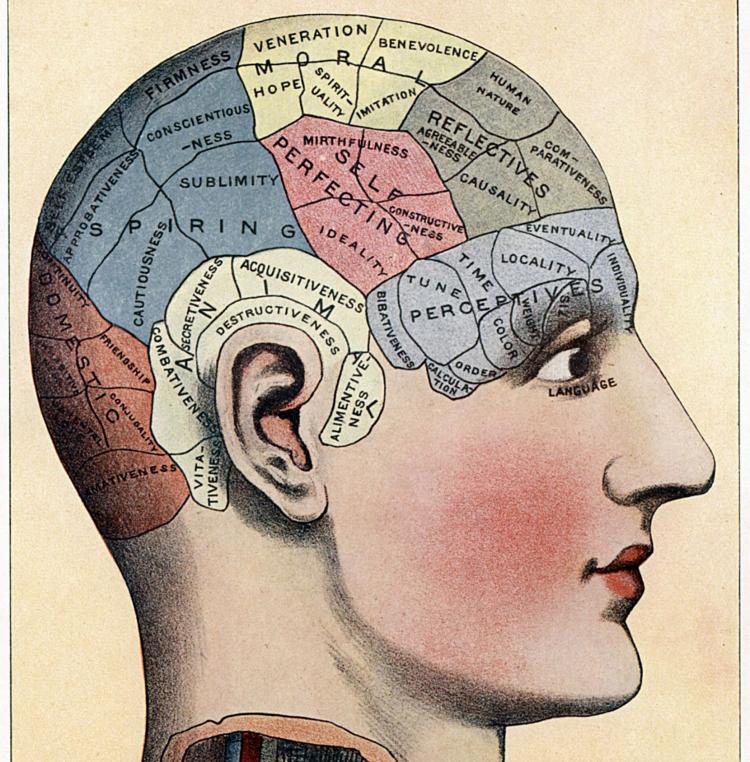
There are generally three types of memory
- Sensory memory
- Short-term memory
- Long-term memory
Sensory memory
The sensory memories act as buffers for stimuli received through the senses. Sensory memory exists for each sensory channel:
- Iconic Memory Sensory memory for visual stimuli
- Echoic Memory Sensory memory for aural stimuli
- Haptic Memory Sensory memory for touch stimuli
- Gustatory Memory: Sensory memory for taste stimuli
- Olfactory Memory: Sensory memory for smell stimuli
Information is passed from sensory memory into short-term memory by attention, thereby filtering the stimuli to only those which are of interest at a given time.
Short-term memory
Short-term memory acts as a scratch-pad for temporary recall of the information under process. For instance, in order to understand this sentence you need to hold in your mind the beginning of the sentence you read the rest. Short term memory decays rapidly (200 ms.) and also has a limited capacity.
Chunking of information can lead to an increase in the short term memory capacity. This is the reason why a hyphenated phone number is easier to remember than a single long number. The successful formation of a chunk is known as closure.
Interference often causes disturbance in short-term memory retention. This accounts for the desire to complete the tasks held in short term memory as soon as possible.
Long-term memory
Long-term memory is intended for storage of information over a long time. Information from the working memory is transferred to it after a few seconds. Unlike in working memory, there is little decay
Long-term memory structure
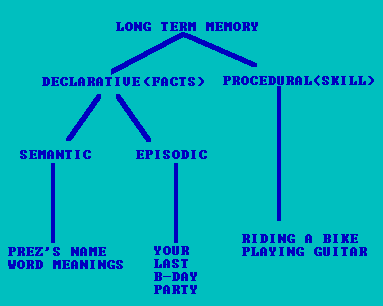
There are two types of long-term memory
- Episodic Memory
- Semantic Memory
Episodic memory represents our memory of events and experiences in a serial form. It is from this memory that we can reconstruct the actual events that took place at a given point in our lives.
Semantic memory, on the other end, is a structured record of facts, concepts and skills that we have acquired. The information in semantic memory is derived from that in our own episodic memory, such that we can learn new facts or concepts from our experiences.
Long-term memory processes
Long-term memory processes store vast amounts of information indefinitely through three core stages: encoding, storage (consolidation), and retrieval.
- Storage
- Encoding or Deletion (Encoding changes data into a new format, while deletion removes data completely)
- Retrieval
Information from short-term memory is stored in long-term memory by rehearsal. The repeated exposure to a stimulus or the rehearsal of a piece of information transfers it into long-term memory. Experiments also suggest that learning time is most effective if it is distributed over time. Deletion is mainly caused by decay and inference.
Emotional factors also affect long-term memory. However, it is debatable whether we actually ever forget anything or whether it becomes increasingly difficult to access certain items from memory. Having forgotten something may just be caused by not being able to retrieve it! Information may not be recalled sometimes but may be recognized, or may be recalled only with prompting. This leads us to the third process of memory: information retrieval.
There are two types of information retrieval
- Recall
- Recognition
In recall, the information is reproduced from memory. In recognition the presentation of the information provides the knowledge that the information has been seen before.
Recognition is of lesser complexity, as the information is provided as a cue. However, the recall can be assisted by the provision of retrieval cues which enable the subject to quickly access the information in memory.
Source: http://www.cc.gatech.edu/classes/cs6751_97_winter/Topics/human-cap/memory.html


