
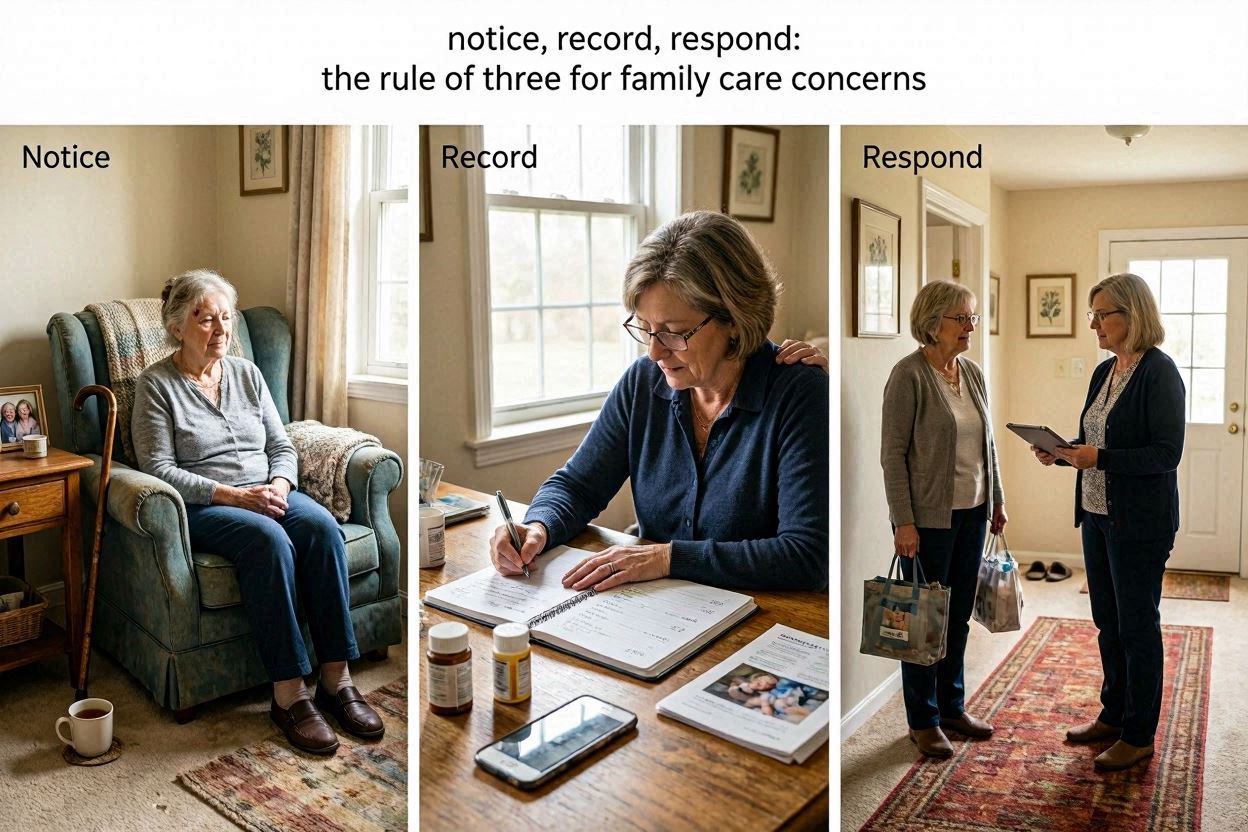
Families often notice when something feels off before they can fully explain what changed. A loved one may seem quieter than usual, less steady on their feet, poorly cared for, or uneasy in a place that used to feel safe. One small change can be easy to overlook. A pattern deserves closer attention.
That is where the rule of three can help. The simple framework of notice, record, and respond gives families a steady way to sort through concerns without rushing to conclusions. It turns scattered observations into something clearer, easier to discuss, and easier to act on.
1. Notice: Pay Attention to Patterns
The first step is to notice what has changed. A single difficult day may not mean much, especially for an older adult dealing with illness, medication changes, or fatigue. Repeated changes tell a different story.
Families should watch for changes in mood, movement, hygiene, appetite, and the condition of the room. A loved one who becomes withdrawn, anxious, unusually quiet, or less steady may be showing that something in their daily care needs a closer look. Because falls among adults 65 and older are a serious safety concern, repeated problems with balance, mobility, or confidence should not be dismissed as routine aging.
Noticing does not mean assuming the worst. It means paying close enough attention when small details begin to point in the same direction.
2. Record: Turn Concerns Into Clear Details
Once a family notices a pattern, the next step is to write it down. Memory can blur when emotions run high, especially when several people are involved in a loved one’s care. A simple record keeps the facts from getting lost.
The most useful notes are specific. Write down the date, time, location, and what was observed. Include who was present, what explanation was given, and whether the same issue has happened before. A note like “Mom seemed tired” may be true, but “Mom was still in yesterday’s clothes at 3 p.m. and said no one helped her change” gives the concern more shape.
Care often involves a broader support system, including nurses, aides, social workers, and others who assist older adults who need care. Clear notes help families speak with that system in a calm, practical way. They also make it easier to distinguish between a one-time mistake and a recurring problem.
A record does not have to be complicated. It only needs to be consistent. Photos, appointment notes, written questions, and follow-up emails can all help create a clearer picture of what is happening over time.
3. Respond: Ask Questions and Take the Next Step
A clear record gives families something solid to work from. Once a pattern appears, the next step is to ask direct questions and pay attention to the answers. Who reviewed the concern? What changed after it was raised? Has a doctor, nurse, administrator, or care coordinator followed up?
When explanations are vague or the same issue keeps returning, it may be time to request a care meeting, seek medical input, or report the concern through the proper channel. A calm response can help families separate a misunderstanding from a deeper problem that needs formal attention.
When a preventable injury leads to medical bills, therapy needs, or a move to safer care, families may need to weigh elder care injury compensation options alongside the resident’s immediate health and safety needs.
Responding does not mean assuming the worst. It means taking the concern seriously enough to protect the person at its center.
A Clearer Way to Protect Care
The rule of three works because it keeps a difficult situation from becoming scattered. Notice the pattern. Record the details. Respond with steady questions and clear action.
Families do not have to solve every care concern in a single conversation. They need a way to stay grounded when emotions are high and information feels incomplete. A simple three-step approach can help protect both clarity and compassion, especially when a loved one depends on others for daily care.


