
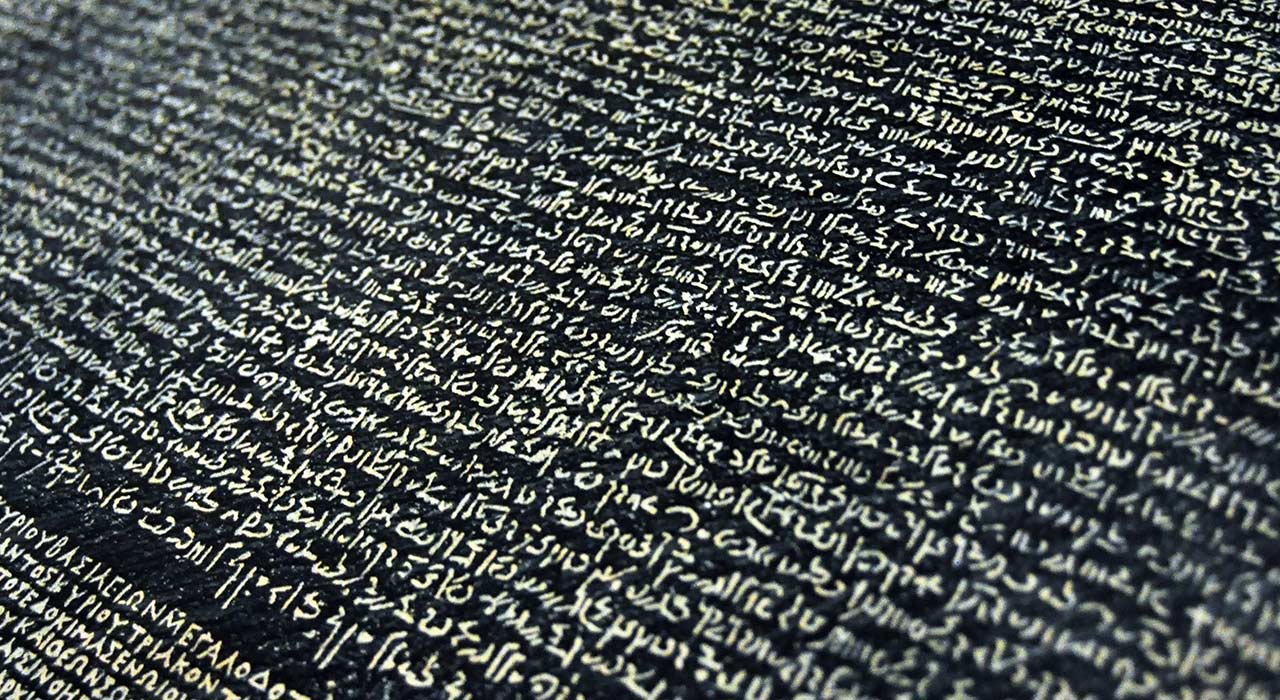
 “This block had three sections of writing on it–one in hieroglyphics, one in another language called Demotic (another language used in Egypt), and one in Greek. This stone is known as the Rosetta Stone. ”
The following is a chapter from “Ancient Peoples: A Hypertext View,” draft by Richard A. Strachan and Kathleen A. Roetzel (1997)
Egyptian hieroglyphics had been used by the Egyptians for thousands of years. However, a particularly bleak period of Egyptian history is the conquest of Egypt by Persia. The Egyptians were dominated by Persian intruders. The events that changed the nature of Egypt were not the Persian conquest but rather the war between Persia (the rulers of Egypt) and the united Greek city-states.
 By James Thornton


