The quest for greater unity and truth is achieved by the famous dialectic, positing something (thesis), denying it (antithesis), and combining the two half-truths (synthesis) which contains a greater portion of truth in its complexity.
Little Lawyer Lesson #1: Use Trilogies #shorts. Robert Gouveia Esq.
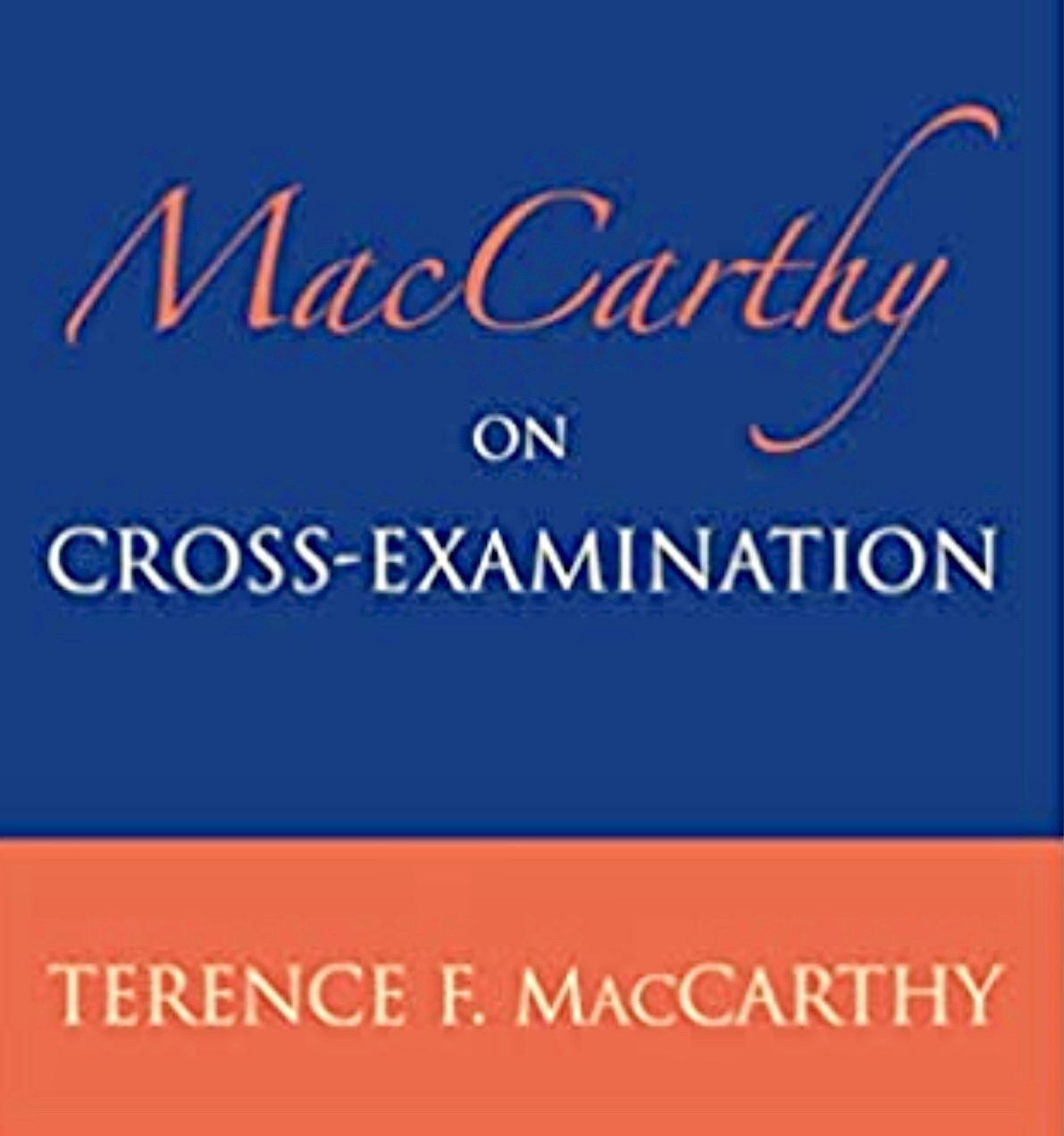
Trilogies can be very powerful tools of persuasion. Terence McCarthy, author of MacCarthy on Cross-Examination, explains just how important trilogies are in trials.
Little Lawyer Lesson #1: Use Trilogies
Robert Gouveia (formerly Robert Gruler) is a criminal defense lawyer in Scottsdale, Arizona, and host of Watching the Watchers, a show focused on Accountability, Transparency and Justice.
I want to use as the subject from which to preach: “The Three Dimensions of a Complete Life.” (All right) You know, they used to tell us in Hollywood that in order for a movie to be complete, it had to be three-dimensional. Well, this morning I want to seek to get over to each of us that if life itself is to be complete, (Yes) it must be three-dimensional. . .
I want to use as the subject from which to preach: “The Three Dimensions of a Complete Life.” (All right) You know, they used to tell us in Hollywood that in order for a movie to be complete, it had to be three-dimensional. Well, this morning I want to seek to get over to each of us that if life itself is to be complete, (Yes) it must be three-dimensional.
There are essentially three categories of paradoxes
Falsidical – Logic based on a falsehood
Veridical – Truthful
Antinomy – A contradiction, real or apparent, between two principles or conclusions, both of which seem equally justified
Willard Van Orman Quine (AKA W. V. O. Quine, or “Van”to his friends) (1908 – 2000) was an American philosopher and mathematical logician, widely considered one of the mostimportant philosophers of the second half of the 20thCentury.