Posted on Leave a comment

McCrabb: Bride hopes third-generation wedding dress remains lucky

Bride wears 3rd generation wedding dress for a lucky marriage like her grandmother, mother

Not only is Jordan Mitterholzer changing her name to Jordan Delgado when she gets married Saturday, but the business that altered her wedding dress — the same dress worn by her mother and grandmother — needs to change names, too.

Twice Blessed Bridal should be called Third Time Threads.

That’s because Mitterholzer, 23, of Dayton, will wear the same dress — with a few alterations, of course — that her grandmother, Jean Beckdahl, 87, wore on April 18, 1953 when she married Walter Beckdahl in Mansfield and her mother, Lynn Mitterholzer, 57, wore on Sept. 19, 1981 when she married Doug Mitterholzer in Springfield.

Continue reading McCrabb: Bride hopes third-generation wedding dress remains lucky
Posted on Leave a comment

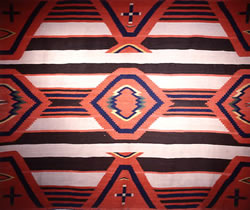
Three phases of a Navajo Chief blanket

3rd-phase
Navajo Chief blanket

Navajo Chiefs Blankets are the most recognizable and valuable of all Navajo weavings.  Navajo Chiefs Blankets have been collected not only by other Native Americans before the United States even existed, but also by such notable collectors as William Randolf Hearst.

A Navajo Chiefs Blanket could be purchased for around fifty dollars in the early 1800’s, one thousand dollars by the turn of the nineteenth century, and today, a Chiefs blanket in excellent condition, could sell for half a million dollars or more.

First Phase Fragment

The First Phase Navajo Chiefs Blanket is simple with indigo blue stripes and white and brown natural churro wool.

Continue reading Three phases of a Navajo Chief blanket

Posted on Leave a comment

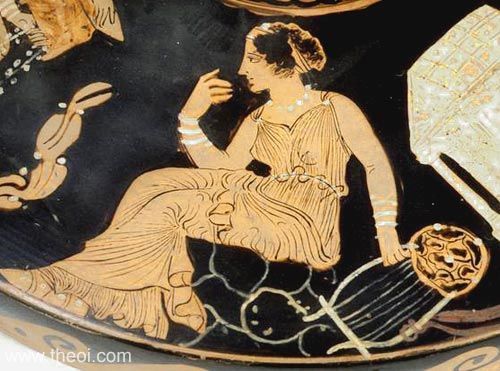
THE MOUSAI

The Mousia
Muse with barbiton, Paestan red-figure lekanis C4th B.C., Musée du Louvre

THE MOUSAI (Muses) were the goddesses of music, song and dance, and the source of inspiration to poets. They were also goddesses of knowledge, who remembered all things that had come to pass. Later the Mousai were assigned specific artistic spheres: Kalliope (Calliope), epic poetry; Kleio (Clio), history; Ourania (Urania), astronomy; Thaleia (Thalia), comedy; Melpomene, tragedy; Polymnia (Polyhymnia), religious hymns; Erato, erotic poetry; Euterpe, lyric poetry; and Terpsikhore (Terpsichore), choral song and dance.

Continue reading THE MOUSAI