Posted on 20 Comments

The Symbolism and Spiritual Significance of the Number Three

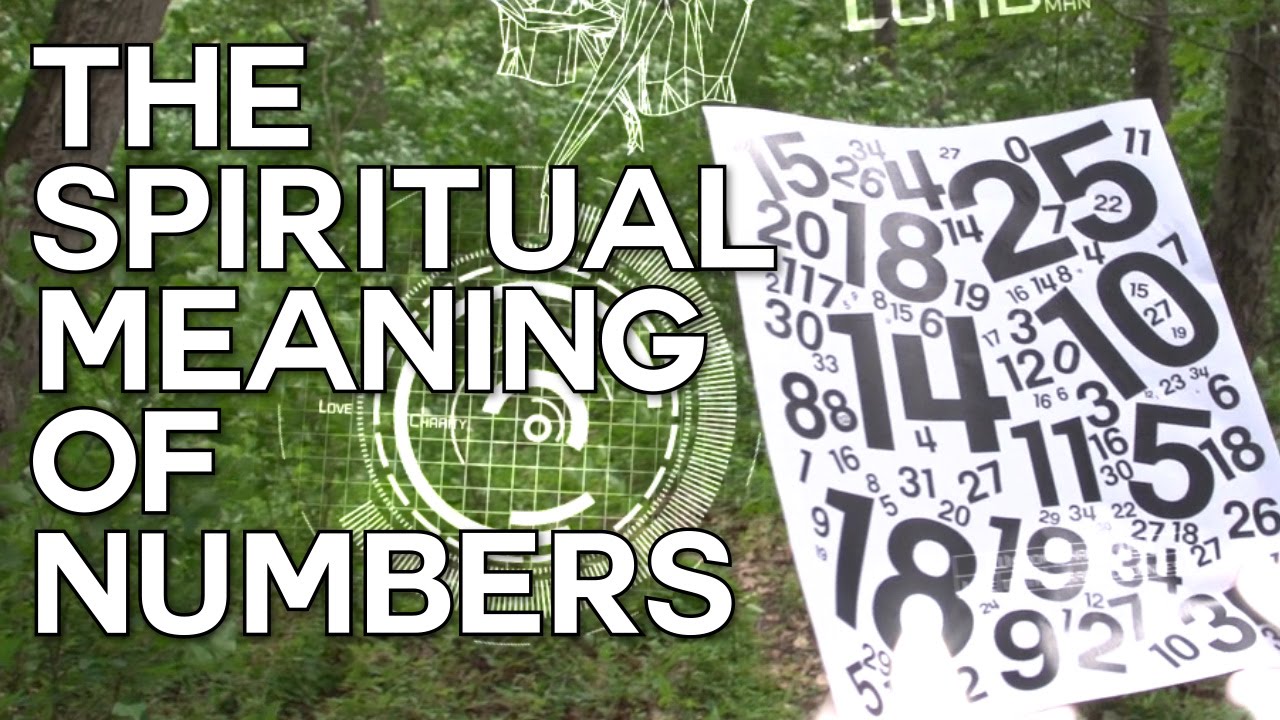
The Spiritual Meaning of Numbers
Tetragrammaton by Francisco Goya: Tetragrammaton by Francisco Goya: “The Name of God”, YHWH in triangle, detail from fresco Adoration of the Name of God, 1772

Three is the first number to which the meaning “all” was given. It is The Triad, being the number of the whole as it contains the beginning, a middle and an end. The power of three is universal and is the tripartide nature of the world as heaven, earth, and waters. It is human as body, soul and spirit.

In the first three numbers, all of the others are synthesized. From the union of oneness and duality (which is its reflection), that is, from triad, proceed all of the other numbers, and from this primordial triangle all figures derive.

There is also, for traditional civilizations, a direct relationship between numbers and letters of the alphabet, to the point where, with many alphabets, numbers were represented by letters, and had no special signs of their own. This is not the case with the early American cultures, which knew no alphabet, but we wish to call attention to this correspondence because not only the alphabetical code, but the numerical one, as well, describe all reality: that is, everything that is numerable or namable–in the sense of “ciphers,” harmonious measures, “proportions”–in sum, the totality of the cosmos, of the knowable.

This threeness or triad, has always been considered sacred–like oneness, duality, and all numbers–by virtue of its very properties and particular attributes. These properties and attributes are manifested in its threefold nature, which of itself is the inevitable expression of a principle, an archetypal fact, that solidifies in a series, as a representation of ideas and energies that materialize in magical, mysterious fashion while obeying precise, universal laws, which the numerical codes and their geometrical correspondences symbolize.

In numerology the number 3 is a whirlwind of expressiveness, joy, and boundless, childlike imagination. Threes possess vibrant energy, opening doors to self-expression and communication. Three’s magnetic personality draws people into its exciting presence.

Trinity Symbol Trinity Symbol

This symbol a triad or trinity. It is a symbol of the unity of body, mind and spirit. The symbol is of universal significance – it is found throughout history and all over the world. It was popularized early in this century by the Russian-born artist, philosopher and scientist Nicholas Roerich. (http://www.roerich.org). It can be interpreted in many different senses: spirit/mind/body in a circle of synthesis; past/present/future enclosed in the ring of eternity; art/science/religion bound in a circle of culture.

Chintamani Chintamani

The oldest of Indian symbols, Chintamani, the sign of happiness, is composed of this symbol and it can be found in the Temple of Heaven in Beijing. It appears in the Three Treasures of Tibet; on the breast of the Christ in Memling’s famous painting; on the Madonna of Strasbourg; on the shields of the Crusaders and coat of arms of the Templars. It can be seen on the blades of the famous Caucasian swords called “Gurda” and on the swords of Japanese nobility.

It appears as a symbol in several philosophical systems. It can be discovered on the images of Gessar Khan and Rigden Djapo; on the “Tamga” of Timurlane and on the coat of arms of the Popes. It can be seen in the works of ancient Spanish painters and of Titian, and on the ancient ikon of St. Nicholas in Bari and that of St. Sergius and the Holy Trinity. It appears on the coat of arms of the city of Samarkand, on Ethiopian and Coptic antiquities, on the rocks of Mongolia, on Tibetan rings, on Buddhist banners, on the breast ornaments of all the Himalayan countries, and on the pottery of the Neolithic age.

pins

This symbol is a symbol of happiness. It can not only appear in these famous places, but also appear around us. Therefore, this symbol can be customized into pins. You can also add your unique design to the custom pins. Whether you keep them for yourself or give them to relatives and friends, they are beautiful blessings. You can also customize the name of the person you want to give them to.

Continue reading The Symbolism and Spiritual Significance of the Number Three
Posted on

Voxel

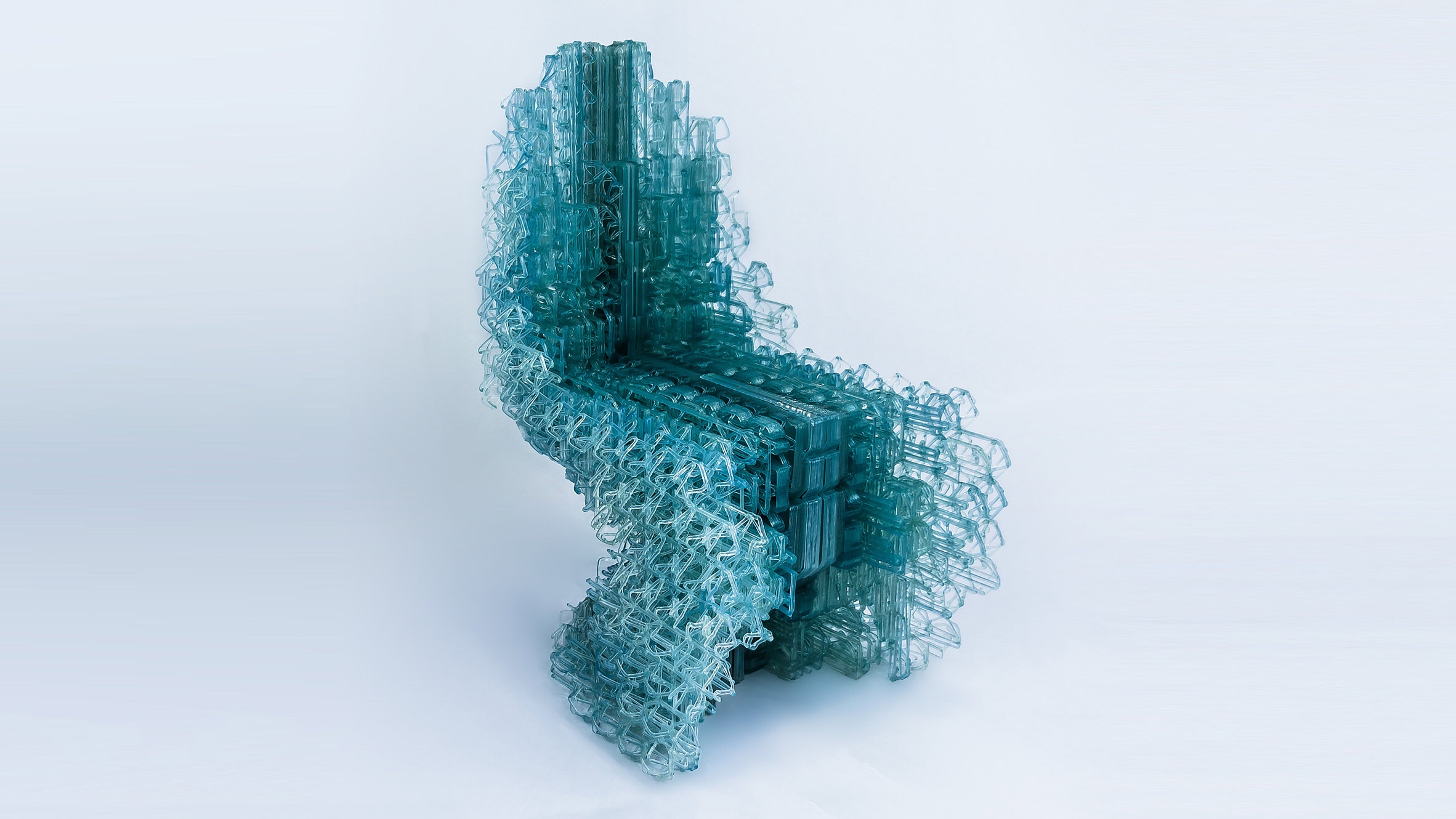
Chair design
Voxel
Voxel – Wikipedia

A three dimensional pixel. A hologram compresses 3D information onto a 2D representation. Two different representations of reality. The world is a pixelated world, not a voxelated world. It’s a hologram.

We know our cosmic horizon of the observable universe is at least 1/1000th in volume of the size of the known universe through observation.

In his words, The universe is at least 1000 times larger in volume than the region what we can ever see. The rest is beyond our horizon. This is like an event horizon of a black hole, but it is a cosmic horizon.

What is the meaning of the stuff we can never detect?

How can we confirm it by real observation?

What is the proper description of a world that is bigger than the cosmic horizon? 

Is our cosmic horizon a two-dimensional scrambled hologram of all that lies beyond it?

Leonard Susskind
Leonard Susskind

Leonard Susskind on The World As Hologram.

Posted on

Rule of Thirds – Top 5 Tips for Photographers

What differentiates an amateur photographer and a professional is not the mastery of technical details. A good photographer knows how to compose an image well. There are many rules of composition; we will study one of the most commonly used ones. And that composition rule is called the rule of thirds.

Rule of Thirds

The rule of thirds, a fundamental principle in photography that suggests dividing the frame into a grid of nine equal segments, can be effectively applied to the layout of photo books as well. Just as this rule aids in creating balanced and visually appealing photographs by aligning subjects along the grid lines or their intersections, it can also guide the arrangement of images on a page. By placing the most important elements of your photos along these lines or at their intersections within the photo book layout, you can create a sense of harmony and aesthetic appeal. This technique helps draw the viewer’s eye through the photo book in a natural, engaging manner, enhancing the overall storytelling impact of your photographic compilation.

This means that you have to place your subject at any one-third of the image frame. Most of the cameras these days have an option to display various types of grids. The grid that is the most common is the 3*3 grid. So, the points where the lines meet is the point where your subjects should be placed. You would have to consider other factors along with it. Placing an image randomly on any of the points will not make an image great. Give it some thought on which point would make the most sense.

Here are some tips for you to learn and master this rule

In landscape photography: Place the horizon line at any line of the grid. This placement should depend on what elements are there in the rest of the image. If you want to show something in the sky and you think that the sky should cover most of your image, then place the horizon on the lower horizontal line. If your subject of interest is below the horizon, then most of the image should cover the part below it, and hence the horizon line should be placed on the upper grid line.

In Portrait Photography: Portrait photography can also use the rule to get the image framed better. To use the rule of thirds on your subject, place the subject on any of the grid lines. And the eyes of the subject should be around one of those four points in the grid. If there are other elements in the frame, then try to place them on the opposite grid points if possible. This will make the photo more interesting.

Rule of Thirds in Photography

In Photojournalism: During fast-paced scenarios, it is hard to spend time perfecting the composition. The rule of thirds comes handy at such times. Keep the 3*3 grid on in your camera and quickly place the most important elements in the grid points. You can do the same when you are doing sports photography or street photography.

While Editing: If your photos are not composed properly, you can make the image better in post-processing. You need to keep in mind the image size will get smaller when you are cropping your photos. So, when you are cropping a photo, do so in a way that the main element in your image is on the grid point. You can also experiment by cropping in different ways and comparing to see what works for you.

The horizon is a natural starting point

Rule of Thirds vs. Golden Ratio: The golden ratio is used to keep the viewer’s eye to the important elements in the photograph. This composition technique is used by photographers to give a balanced look to the image. When a scene has very few elements, you can prefer the rule of thirds style of composition. The golden ratio tends to work better with a scene where there are many elements in the photo which are interrelated.

When the golden ration technique is used, the viewer will follow the arc of the golden ratio and reach the spiral end. This technique can be used on people, places, and other subjects.

There cannot be a straightforward answer to which composition technique is better. It depends on the scene on which to decide whether the golden ratio or rule of thirds is better. The golden ratio, like the rule of thirds, can be used by photographers to crop their photos to give them an aesthetically pleasing look.

Source: https://www.pixpa.com/blog/rule-of-thirds